Maths in Industry Study Groups
An assortment of industrial problems encountered at Maths in Industry workshops
Overview
Throughout my time as a researcher in mathematics I have attended a number of Maths in Industry Study groups, where I was able to work on a wide range of technical problems bought in by different industrial partners. These project typically only last a week, and their aim is to provide an oppurtunity for applied mathematicians to weigh in on these real-world problems.
Durham (UK) 2016
Understanding drivers of environmental chemical concentrations–Syngenta
The goal of this project was to understand why commercial modeling software predicts two seperate peaks in chemical concentration for a single application. We demonstrated that this was to be expected with seasonal rainfall and evaporation.
Study group report not yet available.
Bath (UK) 2017
Optimal design of inflatable hydroponic systems–Phytophonics
We investigated the mechanics of Phytophonics’s novel design for a hydroponic system, and subsequently optimized the design to support greater plant-mass.
Optimising the Design of Polythene Hydroponics Beds: A. Champneys, I. Hewitt, William T. Lee, A. Leida, M. Mcphail, E. Murphy, J. Ockendon, L. Parkin, L. Roberts.
Barreira (Portugal) 2017
Organisational strategies for reducing jams in marathons–Lap2go
We constructed a model for runner density in marathons that accounts for: different release strategies, running abilities, and possible choke points in a course. We then used this model to optimize marathon starting strategy (for race coordinators) to minimize time lost.
Managing start waves for mass running events: A. Paula, S. Barbeiro, R. Barreira, L. Cavique, J. Correia, M. Cruz, R. Enguiça, N. Lopes, M. McPhail, J. Santos, P. Simões, F. Wechsung.
Dublin (Ireland) 2018
Liquid wicking in hierachical microstructures–Analog Devices
We modelled the deposition and spread of a droplet over a microstructured surface. Our goal was to structure the surface for optimal spreading/wicking rate.
Liquid Wicking in Hierarchical Microstructures: L. Ò Nàraigh, C. Deverapu, J. Herterich, D. Flynn, M. McPhail, D. Lunz, J.Dewynne.
Cape Town (South Africa) 2019
Sustainability of fish populations–Prof Phil Broadbridge
We used models for fish population—consisting of partial differential equations—and determined criteria for stable populations. We also determined how sensitive these criteria are to different habitat geometry and carrying capacity.
Study group report not yet available; although, some of the authors went onto publish subsequent work.
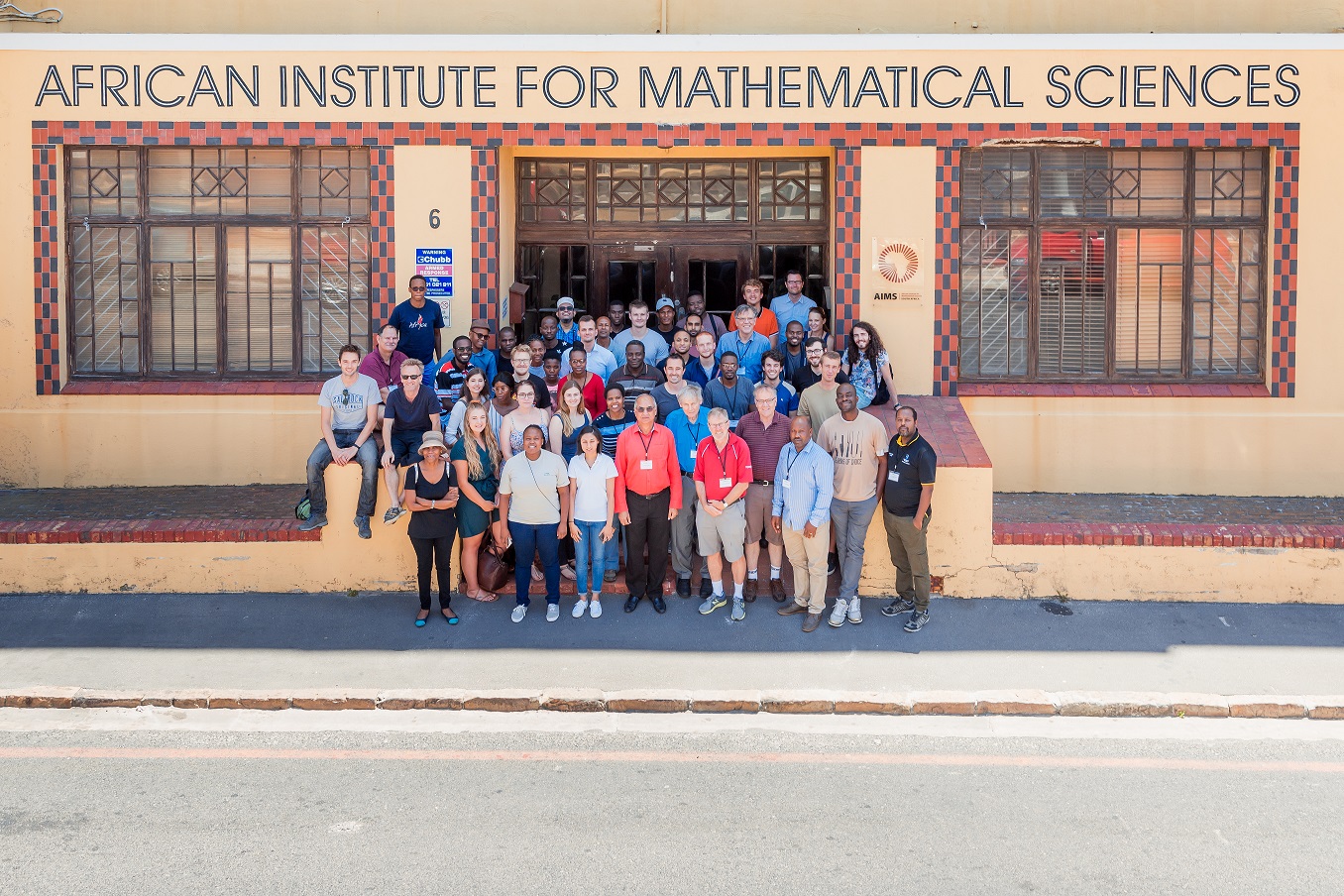
Fig.1 An image of the attendees of the Cape Town study group (2019)